
What Is Drawdown in Forex Trading?
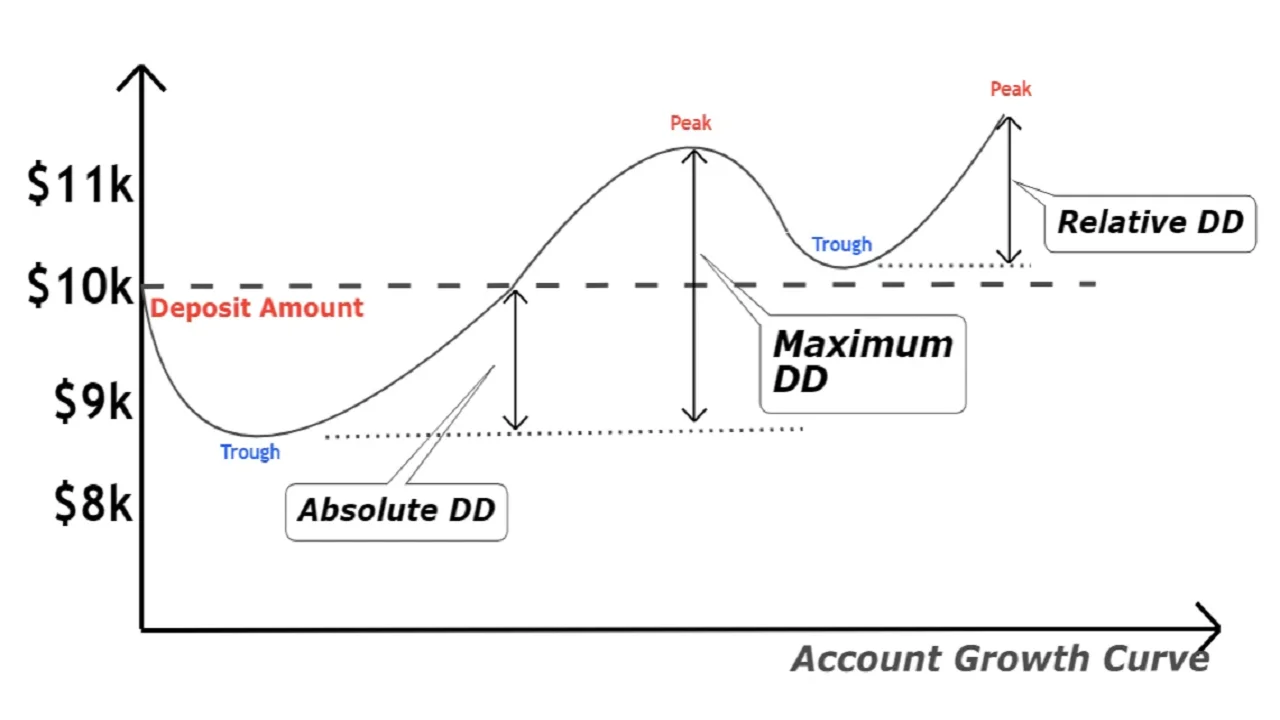
Drawdown refers to the reduction of your trading account from its peak to a subsequent low after a series of losing trades. It is usually expressed as a percentage.
Drawdown shows how much your account has fallen during tough market conditions and helps you measure risk exposure.
Example:
If your account grows to $5,000 but drops to $4,000, your drawdown is 20%.
Types of Drawdown
- Equity Drawdown: Measures decline in real-time, including open trades.
- Balance Drawdown: Measures decline after closed trades only.
- Maximum Drawdown: The largest peak-to-trough drop in your trading history.
Understanding these helps traders recognize how risky their strategy truly is.
Why Drawdown Matters
High drawdown can indicate:
- Poor risk management
- Oversized positions
- Emotional or impulsive trading
- A strategy that’s too aggressive for market conditions
Traders who ignore drawdown often struggle to recover, especially when losses pile up faster than profits.
Keeping drawdown low is a sign of discipline, consistency, and long-term sustainability.
What Is Equity Management?
Equity management focuses on how you protect and grow the real-time value of your trading account. It involves managing open positions, understanding margin requirements, and ensuring you have enough capital to survive losing streaks.
In simple words, equity management answers the question:
“How can I minimize losses while maximizing opportunities?”
Key Principles of Equity Management
1. Risk Only a Small Percentage Per Trade
Most experienced traders risk 1%–2% of their account per trade.
Lower risk equals smaller drawdown and better long-term survival.
2. Maintain Healthy Margin Levels
Avoid using too much leverage. High leverage increases risk, amplifies losses, and can lead to margin calls.
3. Use Stop-Loss and Position Sizing
Correct position sizing helps keep your equity safe even during market volatility.
4. Plan for Losing Streaks
Even the best strategies lose sometimes. A trader with strong equity management prepares mentally and financially for drawdowns.
5. Track Equity Curve Consistently
A smooth, upward equity curve means your risk is well-managed.
Sharp drops are a sign of costly mistakes.
How Drawdown and Equity Management Work Together
Drawdown shows how much you’ve lost.
Equity management shows how well you control those losses.
Together, they:
- Protect your trading capital
- Keep your strategy stable
- Reduce emotional decision-making
- Allow steady, long-term account growth
A trader who understands both can maintain discipline even when markets become unpredictable.