
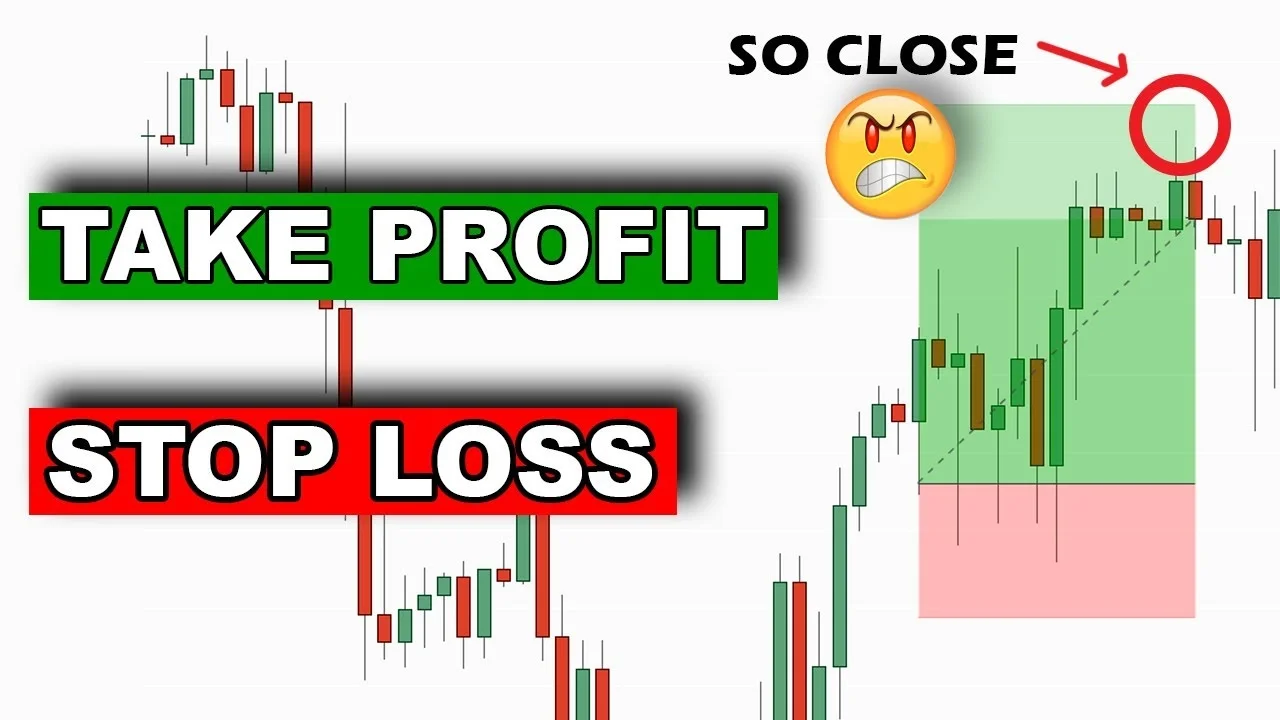
What Is a Stop-Loss?
A Stop-Loss is a preset level where your trade will automatically close to prevent further losses. It acts as a safety net, protecting your account from emotional decisions and unexpected price movements.
If the market goes against your position, the stop-loss ensures that your loss stays within your planned limit.
Example:
If you buy EUR/USD at 1.0950 and place a stop-loss at 1.0920, your maximum risk on that trade is 30 pips.
Why Stop-Loss Is Essential
- Prevents large, account-damaging losses
- Keeps risk consistent from trade to trade
- Removes emotional decision-making
- Helps you follow a strategic trading plan
Without a stop-loss, a single bad position can wipe out weeks—or even months—of progress.
What Is a Take-Profit?
A Take-Profit is a preset level where your trade closes automatically once the market hits your desired profit target. This helps you secure gains without having to monitor the charts constantly.
Example:
If you buy GBP/USD at 1.2600 and place your TP at 1.2660, the trade will close with a 60-pip profit if price reaches that level.
Benefits of Using Take-Profit
- Locks in profit automatically
- Helps prevent greed-driven mistakes
- Keeps your trading consistent and disciplined
- Works perfectly with risk-to-reward strategies
A good TP level ensures you’re not exiting too early—or too late.
Stop-Loss and Take-Profit Work Best Together
Successful forex traders don’t rely on luck—they rely on structure. Using SL and TP together allows you to define:
- How much you are willing to risk
- How much you aim to gain
- Whether the trade is worth taking
This also helps you maintain a healthy Risk-to-Reward Ratio, which is essential for long-term profitability.
How to Set Effective SL and TP Levels
- Place stop-loss beyond key support or resistance zones
- Avoid setting stops too tight in volatile markets
- Use technical tools like ATR, Fibonacci levels, or trendlines
- Aim for a minimum 1:2 or 1:3 risk-to-reward ratio
- Use previous price structure to guide your targets
Setting SL/TP requires balance—wide enough to allow natural price movement, but structured enough to protect your capital.